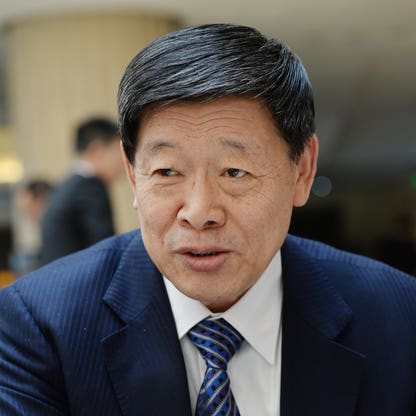
From Cotton to Global Aluminum: Unpacking Zhang Shiping's Business Legacy and Net Worth
The narrative of modern China's economic ascent is replete with stories of visionary entrepreneurs, but few shine as brightly or reach the industrial scale achieved by Zhang Shiping. Hailed as China's "Aluminum King," Zhang Shiping's journey from a cotton ginning plant manager to the architect of a multi-billion-dollar industrial empire is a testament to strategic foresight, relentless expansion, and an unwavering commitment to efficiency. This article delves into his extraordinary career, the companies he built, and the remarkable accumulation of wealth that defined his legacy, providing a comprehensive look at the foundation of
zhang shiping net worth.
The Roots of a Tycoon: From Cotton Fields to Textile Powerhouse
Zhang Shiping's entrepreneurial journey began not in the gleaming world of metals, but amidst the fibers of cotton. Born in 1946, his early career laid the groundwork for the colossal ventures that would follow. By 1981, at the age of 35, he had already risen to the position of general manager at Zouping's No. 5 Cotton Ginning Plant. This experience provided him with invaluable insights into manufacturing, supply chains, and management – crucial skills that would serve him well.
In 1994, seizing the opportunities presented by China's burgeoning market reforms, Zhang Shiping, alongside a team of managers, founded Weiqiao Textile Co. Ltd. What began as a local cotton-processing business soon burgeoned into a global behemoth. Under his astute leadership, Weiqiao Textile evolved into the world's largest producer of cotton yarn and denim. This remarkable achievement speaks volumes about his ability to scale operations, control costs, and penetrate international markets. The company's successful listing in Hong Kong in 2003 marked a significant milestone, providing the capital injection necessary for further expansion and cementing its position as a global leader in the textile industry. Today, Weiqiao Textile continues its legacy under the stewardship of his daughter, Zhang Hongxia, showcasing the enduring strength of the family's business acumen.
Forging a New Path: The Birth and Ascent of China Hongqiao Group
While Weiqiao Textile was a triumph, Zhang Shiping was not one to rest on his laurels. His strategic vision saw opportunities beyond the textile industry. In a move that proved to be a defining moment of his career, he decided to pivot into the aluminum sector. This was not a minor diversification but a monumental shift, transforming the core identity of his expanding business interests. The textile company was subsequently renamed China Hongqiao Group Ltd., signaling an aggressive new direction.
The transition into aluminum production was characterized by rapid, almost unprecedented expansion. Zhang Shiping adopted a highly integrated strategy, controlling every step of the aluminum production process, from sourcing bauxite to generating electricity for smelting, a hugely energy-intensive process. This vertical integration was a masterstroke, allowing China Hongqiao to achieve significant cost efficiencies and insulate itself from market fluctuations in raw material and energy prices. This approach proved incredibly effective, propelling the company to quickly outpace established industry giants such as Russia's United Co. Rusal and China's state-owned Aluminum Corp. of China Ltd. Within a relatively short period, China Hongqiao rose to become the world's largest aluminum producer, earning Zhang Shiping the fitting moniker of China's "Aluminum King."
The group's public listing in Hong Kong in March 2011 was another pivotal event, raising a substantial $817 million despite challenging market conditions. This injection of capital further fueled its growth and expansion, enabling it to solidify its global leadership. Today, China Hongqiao Group, along with its subsidiaries, is a massive enterprise employing 31,872 people, a testament to Zhang Shiping's incredible ability to build and manage large-scale industrial operations. The company's continued success is now overseen by his son, Zhang Bo, who serves as CEO and has also taken on the role of chairman.
The Measure of Success: Unpacking Zhang Shiping's Net Worth and Influence
Understanding the incredible scope of Zhang Shiping's business ventures naturally leads to the question of his financial standing. The
zhang shiping net worth is a direct reflection of the success and scale of the empires he meticulously constructed. At its peak, his fortune was estimated by Forbes to be around $4.7 billion, ranking him 484th on the Forbes Billionaires 2019 list. This substantial wealth was primarily derived from his significant shareholdings in his two publicly listed companies: China Hongqiao Group and Weiqiao Textile.
His net worth was not static; it was intrinsically linked to the performance of these companies on the stock market. For instance, reports indicate that his net worth increased by over $1 billion in a single year due to the rising stock prices of his enterprises. This illustrates a key principle of wealth accumulation for business owners: the market valuation of their companies directly translates into their personal wealth. Investing in strategically sound businesses with strong fundamentals and growth potential is paramount.
For those interested in the specifics of his financial achievements, delve deeper into
Zhang Shiping's $4.7 Billion Fortune: The Aluminum King's Empire, which provides a more granular look at the components of his vast wealth and the financial strategies that contributed to it. His story underscores the potential for monumental wealth creation through entrepreneurship, especially in rapidly developing economies like China, where visionary leaders can identify and capitalize on large-scale industrial opportunities.
A Legacy Entrusted: Family Leadership and Enduring Impact
Zhang Shiping's passing on May 23, 2019, at the age of 72, marked the end of an era for the Chinese industrial landscape. However, his death did not signal the end of his business empire. Instead, it highlighted the robust succession planning he had put in place, ensuring the continued prosperity and leadership of his conglomerates. His son, Zhang Bo, who had already served as chief executive of Hongqiao since January 2011, smoothly transitioned into the role of chairman, demonstrating a well-prepared handover of power. Similarly, his daughter, Zhang Hongxia, continues to lead Weiqiao Textile, maintaining the family's deep involvement in the businesses Zhang Shiping founded.
This emphasis on family leadership is a common characteristic of many successful Chinese enterprises, fostering stability and a long-term vision. Zhang Shiping, who resided in Binzhou, China, with his wife and three children, built not just companies but a lasting legacy that continues to impact thousands of employees and contribute significantly to the global economy. His foresight in preparing the next generation to take the helm ensures that his vision continues to guide these industrial powerhouses. To understand the intricacies of this transition, explore
Who Inherited Zhang Shiping's Multi-Billion-Dollar Business Empire? for a detailed account of the generational shift in leadership.
Conclusion
Zhang Shiping's journey is a compelling saga of entrepreneurial spirit, strategic acumen, and the relentless pursuit of scale and efficiency. From mastering the intricacies of cotton processing to dominating the global aluminum market, he demonstrated an unparalleled ability to identify and capitalize on opportunities, transforming local ventures into international industrial giants. His legacy is not just measured by the impressive figures of his
zhang shiping net worth, which stood at billions, but by the thousands of jobs created, the innovative industrial practices he championed, and the indelible mark he left on China's economic landscape. He truly embodied the spirit of the "Aluminum King," leaving behind a powerful testament to vision, hard work, and the transformative power of enterprise.